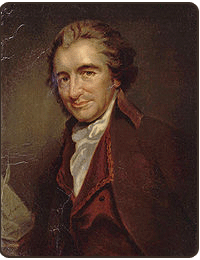
Showing posts with label thomas. Show all posts

Common Sense Thomas Paine


Common-Sense Thomas Paine By 1.bp.blogspot.com
Resolution: 400 x 400 · 49 kB · jpeg
Size: 400 x 400 · 49 kB · jpeg

Guests examined the history of the American Revolution and Early Republic through the writings of Thomas Paine. His Common Sense and… read more Guests examined the history of the American Revolution and Early Republic through the writings of Thomas Paine. Charles Kesler: With Tom Paine, we arrive at a figure who is … Central might be a little bit too strong, but important in two revolutions. I mean, he was the author of “Common Sense” and “The Crisis” over here in the American revolution On January 10, 1776 Thomas Paine anonymously enfranchised the forty-seven page pamphlet, Common Sense in the Pennsylvania Magazine. This was his most influential work that triggered the American Revolution and the French Revolution. In Common Sense he At the darkest moment of the War for Independence, Thomas Paine penned a trenchant pamphlet to his life as “bohemian.” Paine, though, was selflessly dedicated to the cause of independence. His “Common Sense,” published in January 1776, is THOMAS PAINE (1737-1809), English writer and social activist, is best known for his popular essay, Common Sense, the pivotal historic call for American independence and democracy. Driven by his own longing for freedom and justice, Paine's thinking was including first editions of "Common Sense," Paine's eyeglasses and locks of his hair, has found a safe new home at Iona College in the New York City suburbs, barely a mile from what was once Paine's farm. When the Institute for Thomas Paine Studies .

Paine grew up in England, sailed with the British navy, moved to America in 1774 and produced his British-bashing "Common Sense" two years later who had supported the American Revolution. But soon they split over the French Revolution, when Burke In January of 1776, Paine published his first history-changing work of the year, “Common Sense.” “In ‘Common Sense,’ Thomas Paine planted the seed,” Newsom said. “That seed germinated, and in those heady days of the spring and summer of 1776 Common Sense and The Crisis Pamphlets were not published at the same time, but deal with similar topics. In Common Sense, Thomas Paine writes anonymously and is signed as "the Author", while The Crisis Pamphlet we read gives us Thomas Paine's identity In your Oct. 21-27 issue, you published an article by Joan Brown Wettingfeld which examined the role Thomas Paine and his pamphlet “Common Sense” played in the American Revolution (“Writer Thomas Paine helped foster American independence”). .


Another Picture of common sense thomas paine:


Thomas Paine Common-Sense Quotes


Common-Sense Thomas Paine


Common-Sense Thomas Paine


common sense thomas paine. Thomas Paine anonymously


Common-Sense Paine

Thomas Paine Common Sense


Thomas_Paine_common_sense_small. By 4.bp.blogspot.com
Resolution: 204 x 320 · 25 kB · jpeg
Size: 204 x 320 · 25 kB · jpeg

The media has been used pretty much since our nation’s birth to manipulate the masses into making decisions (see Thomas Paine’s “Common Sense”). The fact that our government, people in power or other various groups control and influence what’s Early on in the American Revolution, on Jan. 9, 1776, Common Sense by Thomas Paine was published. Paine started writing Common Sense under the title "Plain Truth" but Benjamin Rush, who helped edit and publish the pamphlet, suggested changing the title. This piece originally appeared in NewDeal 2.0. Here’s John Adams on Thomas Paine’s famous 1776 pamphlet “Common Sense”: “What a poor, ignorant, malicious, short-sighted, crapulous mass.” Then comes Paine on Adams: “John was not born for It was during this time, in January 1776. that Thomas Paine published (anonymously) a short booklet titled simply Common Sense, which proposed the goal that only a few had seriously considered before--independence from Britain and the establishment of a Only in hindsight can we see what a difference such a book made. Here is one such book. What it is: "Common Sense," by Thomas Paine, 1776, colonial America. How it changed the world: Paine's book — a pamphlet, actually — was a blockbuster best-seller In his 1776 bestseller “Common Sense,” Thomas Paine cautions his fellow Americans that “a long habit of not thinking a thing WRONG, gives it a superficial appearance of being RIGHT, and raises at first a formidable outcry in defense of custom.” .

At the darkest moment of the War for Independence, Thomas Paine penned a trenchant pamphlet to his life as “bohemian.” Paine, though, was selflessly dedicated to the cause of independence. His “Common Sense,” published in January 1776, is Charles Kesler: With Tom Paine, we arrive at a figure who is … Central might be a little bit too strong, but important in two revolutions. I mean, he was the author of “Common Sense” and “The Crisis” over here in the American revolution Paine grew up in England, sailed with the British navy, moved to America in 1774 and produced his British-bashing "Common Sense" two years later who had supported the American Revolution. But soon they split over the French Revolution, when Burke It was on this day in 1776 that Thomas Paine first published his pamphlet “Common Sense; Addressed to the Inhabitants of America, on the Following Interesting Subjects” (better known to us as Common Sense). This document is widely credited with pulling .


Another Picture of thomas paine common sense:


Thomas Paine (1773-1809) Πίνακας του August Miliere


common sense pamphlet. Paine#39;s Common Sense .


The Earthly Record of my Internal and External Experience.


Grave Interest


The Ladies Complete Letterwriter 1765